
It was an early start, cold and dark, and a good coffee was required to kick-start the day. As I was heading to Loch Lomond for the day, I’d imagined taking in the palette of winter hues. The crisp light on the loch, shades of silver blue, dusty heather and bright russet in the winter sunlight. This was vaguely present, but the overall colours were grey. Any hint of colour dissipated when I arrived at the Loch Lomond distillery. I had done my essential map reading, as my navigational skills are very poor, as well as some homework, so I knew what to expect. No pretty whitewashed walls or pagoda roofs. This was a monster.
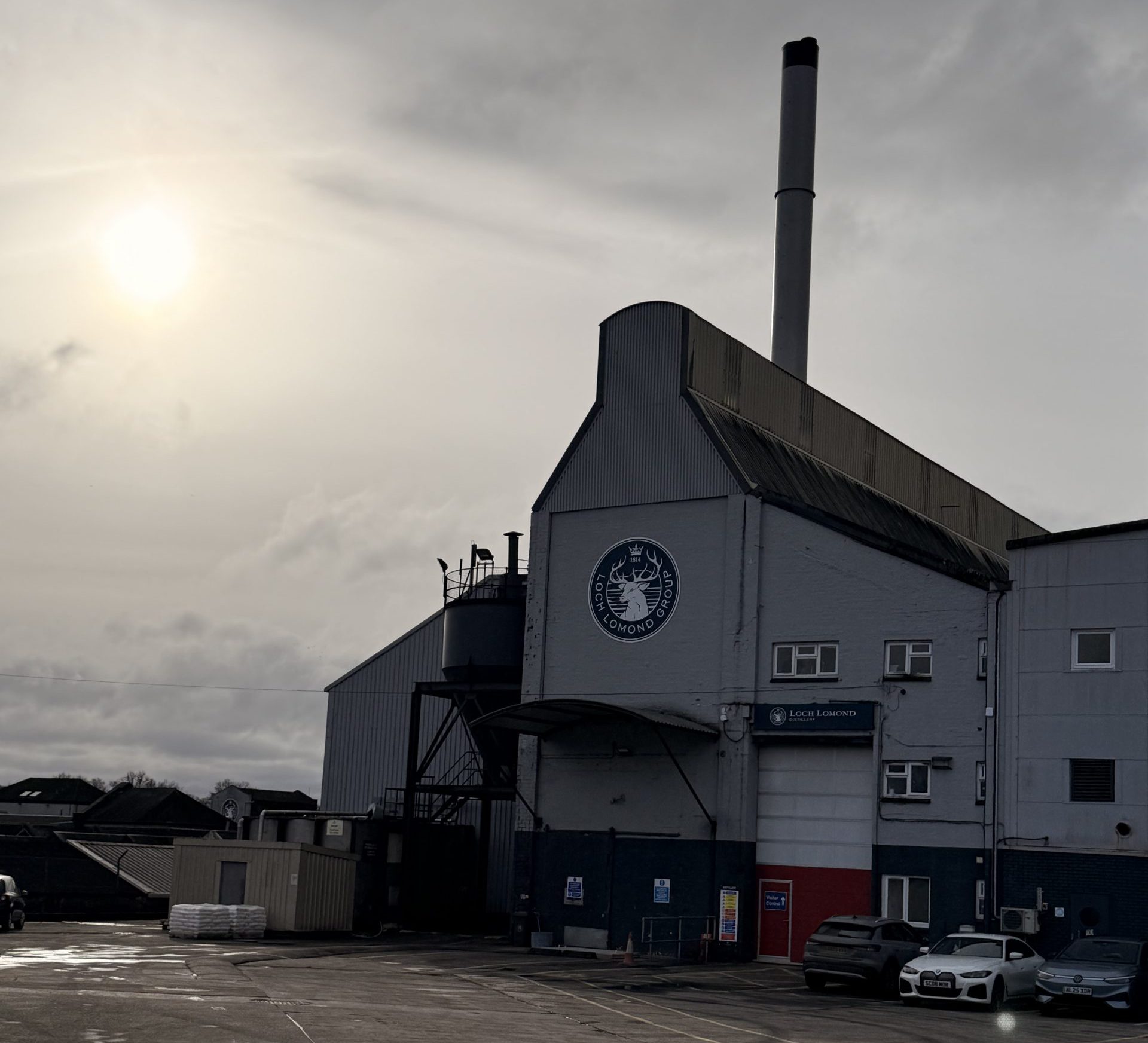
What I didn’t appreciate was the sheer scale of the operation, which is industrial in appearance and encompasses, rather bizarrely, a woollen mill which is squashed up beside a boundary wall. Despite the austere appearance, we were welcomed into a warm tasting room by Gary Mills. More coffee was required for my fellow adventurers, Karen Somerville, Nicola Young and Karen Walker. Collectively, we twitter like chattering birds, finishing each other’s sentences in the tumble to catch up, swooping on the glasses of new make, donning high viz jackets with ‘do you have this in my colour?’ Not a blink or an eye roll from Gary.
Loch Lomond was created by the late Sandy Bulloch, who was visionary in his plan for the distillery. I think it’s fair to say that he was a self-sufficient type of fellow with a progressive mind. His mantra was to create a variety of aroma and flavour from distillation rather than maturation, which he manifested in his extraordinary array of stills.
The distillery was opened as part of the expansion to Littlemill in 1966. In 1990, the second pair of straight-neck pot stills was installed, with the grain distillery opening four years later. In 1998, a pair of traditional swan neck stills were added. In 2007, a single grain Coffey still was added. The site can produce 25 million litres of spirit annually.
Once the discussion over high viz jackets was resolved, we started out to the distillery.
Fermentation lasts for 92 hours, sometimes longer, to create a super fruity wash jumping with esters. This is the building block for the Loch Lomond style, which runs through the various distillations. Four different yeasts, including Champagne and Chardonnay strains are used.
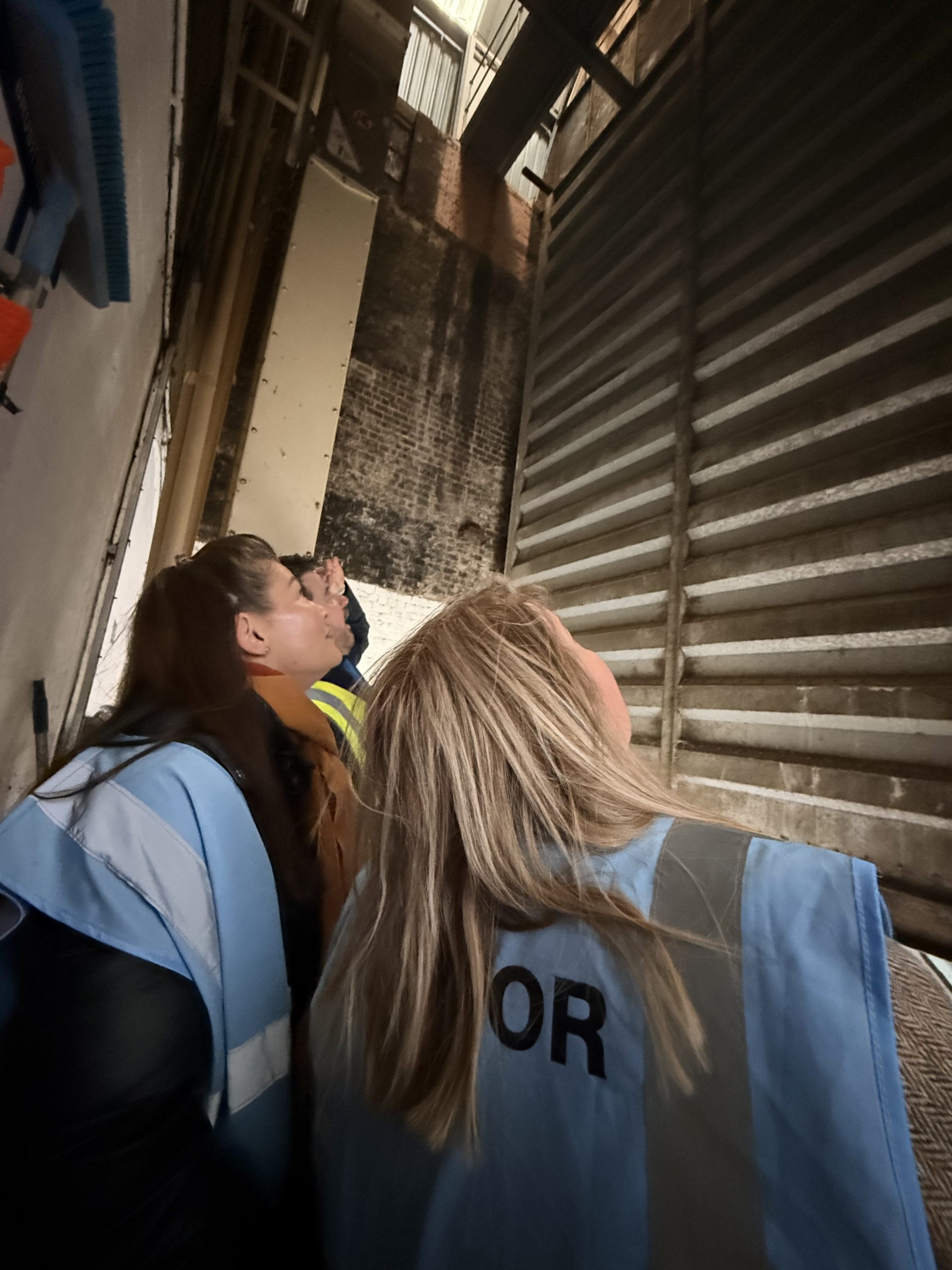
So, we proceed to the still house. If you don’t like heights, please don’t come to this distillery.
It reads like the 12 days of Christmas.
Three pairs of of straight neck pot stills
One pair of traditional swan neck pot stills
One continuous Coffey ‘malt’ still
Two pairs of continuous Coffey grain stills
And a partridge in a pear tree
If this myriad of information isn’t already baffling the adventurers, then Gary baffles us more.
The straight neck pot stills have plates inside the neck that allow a variety of styles of spirit to be distilled from a light, floral Lowland-esque to a heavier spirit. The stillman will also use different cut points to allow the creation of five distinctly different spirit styles.
The copper column Coffey style still, 100% malted Scottish barley is used to produce their single grain spirit, which runs from the still between 80 and 85% ABV. The peated barley from the North East allows them to produce the world’s only peated single grain spirit.
As we head to a neighbouring building we pass an outdoor shower which would be perfect on Portobello promenade for the swimmers. Naturally the adventures like this. The two pairs of continuous stills are tightly squeezed into an improbable space. I don’t think many visitors get to see this as it is distinctly functional. The stills have a capacity for 20 million litres of spirit (90% wheat and 10% malted barley)
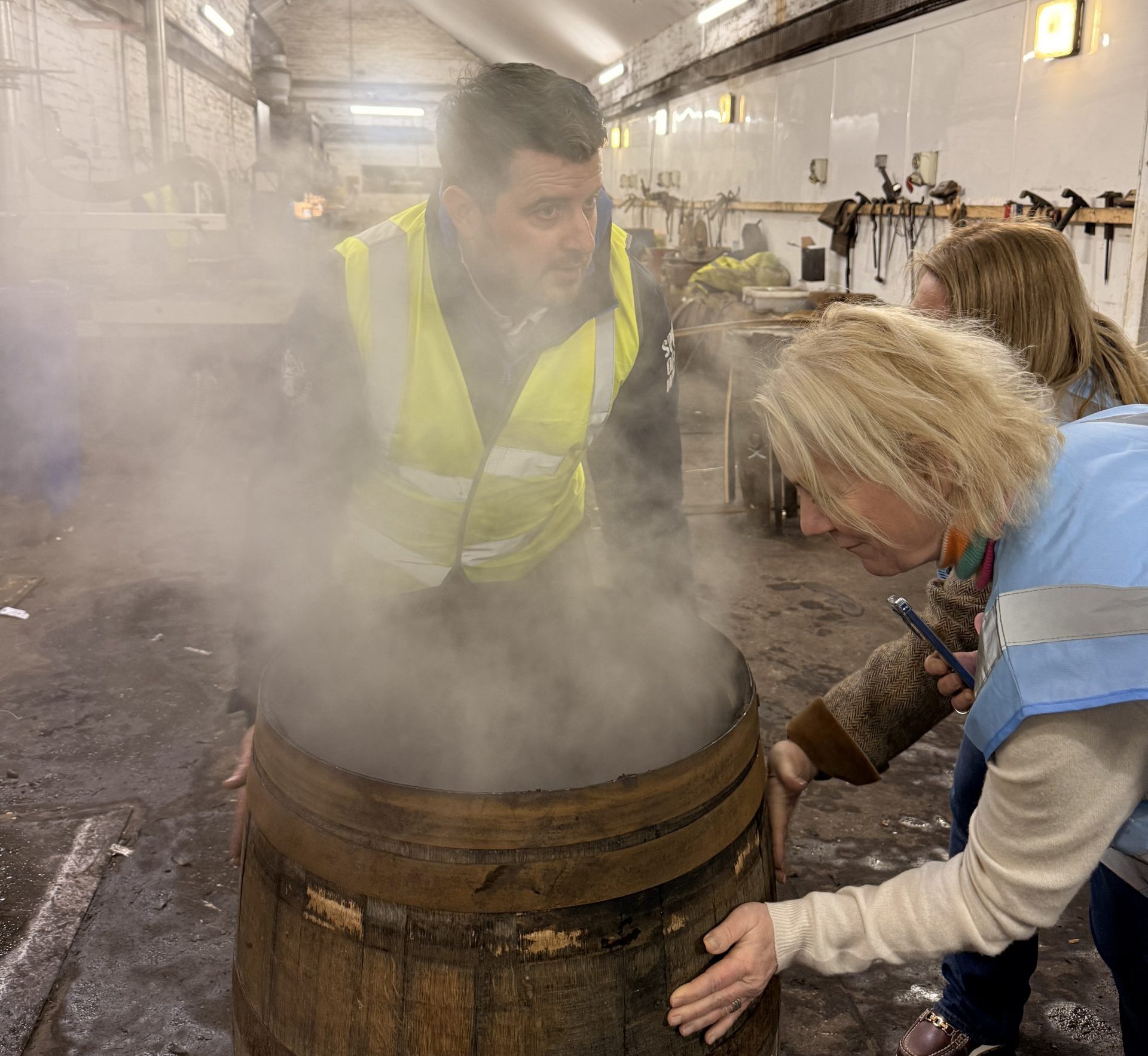
I get the feeling Gary has kept a wee something up his high viz sleeve, and as we move to the cooperage, this becomes evident very quickly. Loch Lomond is one of four distilleries in Scotland to have a cooperage which manages 20,000 barrels a year with eight coopers and one apprentice who are heading off for their lunch, leaving one behind. The cooperage was one of the first to install a rejuvenation programme (every canny Sandy again), and we are lucky to have Gerry on hand to demonstrate. Cue much excitement, jostling for the best position, juggling of phones in cold hands and finally a hefty spray of water. The show is over and we gratefully return to the warmth of the tasting room where the glasses glisten with new make.
As we nose and taste it becomes evident that Loch Lomond isn’t just a massive factory producing a lot of spirit. The glasses yield delicate differences of styles all with the trademark luscious fruitbowl and a glove box of boiled sweeties.
Gary’s patience throughout the visit stretched like a giant elastic band, rather like the ones the posties drop (incidentally, approximately 250 million rubber bands each year). He had herded four cats safely through the site, navigating all our questions without one internal roll of the eyes. This quietly unassuming brand is one to watch if you haven’t already noticed it.
Thanks to Gary Mills, Global Brand Ambassador, and the team at Loch Lomond distillery and Luss.
No responses yet